
UAE e-invoicing readiness and implementation support
E-Invoicing UAE 2026
E-invoicing in the UAE is being introduced in phases, so for most companies the question is not whether to prepare but which phase they fall into. Readiness means structured invoice data rather than PDFs, invoice fields aligned to UAE VAT rules, clean customer and supplier master data, and an accounting system that can export and validate all of it. STH Financial Services assesses where your invoicing stands today, reports the gaps, and builds the implementation roadmap to close them.
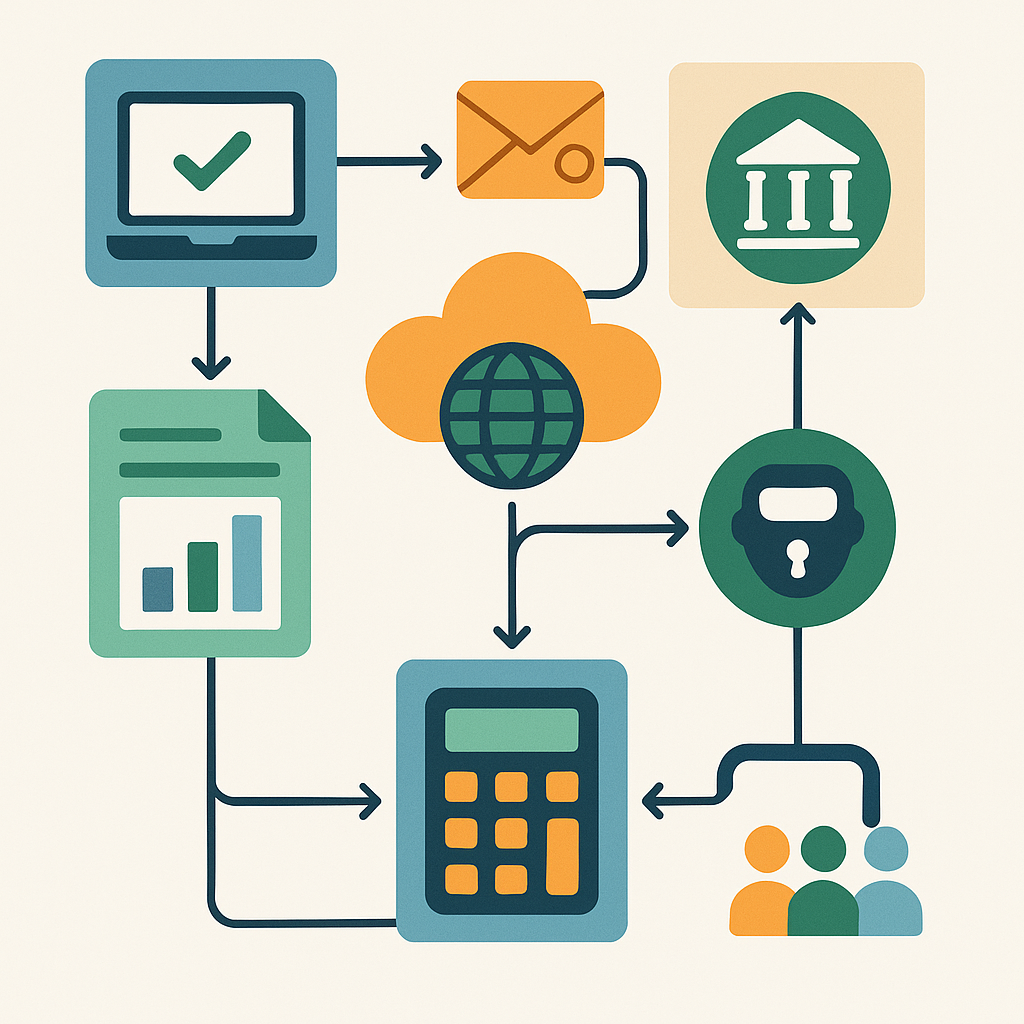
Key Takeaways
- UAE businesses should start preparing before mandatory e-invoicing timelines affect daily invoicing.
- Readiness is not only software; it includes VAT invoice alignment, data quality, approval flows, and staff training.
- Peppol and PINT-style structured invoice readiness may influence how invoices are created, validated, exchanged, and archived.
- STH Financial Services provides advisory, accounting, VAT, and implementation support for UAE e-invoicing compliance.
What should UAE businesses know about E-Invoicing UAE 2026?
E-invoicing, or electronic invoicing, is the creation, exchange, validation, and storage of invoices in structured digital formats rather than only PDF or paper. UAE businesses should monitor official Ministry of Finance and FTA guidance as the framework develops and avoid relying on informal deadline assumptions. For the field-by-field detail of what a compliant invoice must carry, see our breakdown of UAE e-invoicing requirements for 2026.
The FTA, or Federal Tax Authority, administers UAE federal tax systems including VAT and Corporate Tax. EmaraTax is the FTA’s online tax services platform. While final operational rules may evolve, businesses can act now by improving invoice master data, accounting workflows, tax coding, and system integration.
| Readiness area | What to prepare |
|---|---|
| Invoice structure | Required fields, tax values, buyer and supplier details, currency, and references. |
| VAT alignment | Consistency with UAE VAT invoice requirements under Federal Decree-Law No. 8 of 2017 and related regulations. |
| System readiness | ERP, accounting software, APIs, user roles, workflows, and reporting exports. |
Why does UAE e-invoicing matter for VAT, accounting, and compliance?
Electronic invoicing UAE requirements will make invoice accuracy more visible. Errors in tax registration numbers, supply dates, VAT rates, customer names, credit notes, and taxable values can disrupt submissions, reconciliations, collections, and audit trails.
For VAT e-invoicing UAE readiness, finance teams should compare existing invoices with UAE VAT rules, sales ledgers, customer contracts, and accounting entries. STH Financial Services supports this through VAT Compliance, Accounting & Bookkeeping, and tax review services.
Cleaner invoice data
Standardized supplier, customer, VAT, and product data reduces avoidable rejection, correction, and reconciliation work.
Better tax control
Validated invoice fields improve VAT return preparation, audit readiness, and management reporting.
Smoother implementation
Early assessment gives time for software configuration, testing, staff training, and process redesign.
Who needs to prepare for UAE e-invoicing requirements?
Most UAE businesses issuing tax invoices, simplified invoices, credit notes, debit notes, or B2B sales documents should assess exposure. This includes mainland companies, free zone entities, branches, groups, service firms, retailers, distributors, contractors, professional practices, and e-invoicing for small businesses UAE.
Free zone companies are the most common source of confusion here, because licence location does not by itself decide scope. If your entity is licensed in a Dubai, Sharjah or designated free zone, read our detailed guide to e-invoicing for free zone companies in the UAE, which sets out what determines your obligation and how designated-zone supplies are treated. To see which businesses are expected to be brought in first, see the UAE e-invoicing Phase 1 timeline.
New companies should also build compliant invoicing processes during formation. If you are setting up operations, STH Financial Services can connect e-invoicing planning with company setup, bookkeeping, VAT compliance, and accounting system selection.
How can your accounting system become e-invoicing ready?
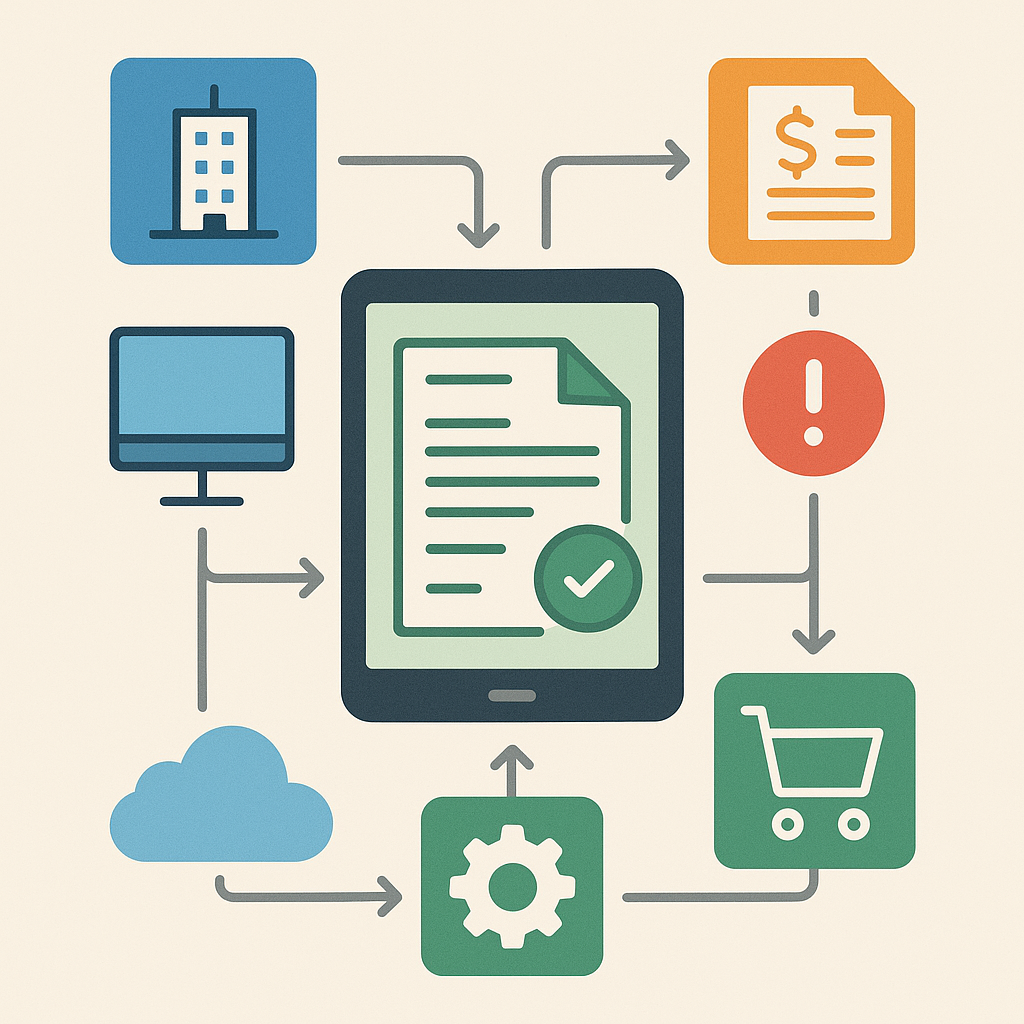
A strong e-invoicing accounting system UAE setup requires accurate source data, defined approval rules, and structured invoice output. Peppol is an international electronic document exchange network, and PINT refers to Peppol International Invoice specifications. Where appropriate, Peppol UAE e-invoicing readiness means checking whether systems can produce structured, validated invoice data, not only PDF documents.
Readiness checklist
- Verify trade licence names, TRNs, addresses, customer records, and supplier records.
- Review VAT tax codes, exempt supplies, zero-rated supplies, reverse charge treatment, and credit notes.
- Check invoice numbering, approval workflows, invoice archiving, and user access controls.
- Confirm ERP or accounting software capability for structured fields, exports, APIs, and integrations.
- Map sales, procurement, inventory, finance, and tax processes before configuration.
What is STH Financial Services’ e-invoicing implementation roadmap?
Our e-invoicing implementation UAE approach is practical, phased, and aligned with business operations. We do not make unsupported legal promises; instead, we help you prepare against available UAE guidance, VAT rules, and system readiness expectations.
- Readiness assessment: Review invoices, ledgers, master data, tax codes, software, and workflows.
- Gap report: Identify missing fields, VAT inconsistencies, process weaknesses, and system limitations.
- Data cleanup: Correct supplier, customer, product, pricing, and tax master data.
- System support: Coordinate configuration with ERP, accounting software, or implementation partners.
- Testing: Validate invoice samples, credit notes, reporting exports, and audit trails.
- Go-live support: Train users, monitor exceptions, and refine controls after implementation.
What e-invoicing services UAE does STH Financial Services provide?
E-invoicing readiness assessment UAE
We assess your invoices, accounting data, VAT treatment, and software readiness, then provide practical remediation priorities.
Invoice data validation
We review mandatory fields, customer data, supplier data, product codes, tax values, and approval checkpoints.
Software support coordination
We work with your internal team or vendor to align finance, VAT, and reporting requirements with system configuration.
Ongoing compliance support
After rollout, we help monitor exceptions, reconciliations, filing support, controls, and process improvements.
Which documents and data should you prepare first?
Before choosing an e-invoicing consultant UAE or e-invoicing software support UAE partner, organize your core records. Good preparation shortens implementation time and reveals issues before they become operational problems.
| Data set | Examples |
|---|---|
| Company records | Trade licence, TRN, registered address, branches, bank details. |
| Invoice samples | Tax invoices, simplified invoices, credit notes, debit notes, pro formas. |
| Master data | Customers, suppliers, items, services, VAT codes, payment terms. |
Why choose STH Financial Services as your UAE e-invoicing service provider?
- UAE-focused advisory: We connect e-invoicing readiness with VAT, accounting, bookkeeping, and corporate tax compliance.
- Practical implementation view: We focus on data, controls, workflows, and reports, not just software selection.
- Clear deliverables: You receive gap findings, action priorities, data cleanup guidance, and implementation support steps.
- Ongoing support: We help businesses maintain invoice quality after go-live through reviews and compliance assistance.
Common mistakes include treating e-invoicing as a PDF project, ignoring customer master data, delaying VAT invoice reviews, overlooking credit notes, and waiting until official deadlines create pressure. Early preparation protects continuity — and it is cheaper than the alternative, as our guide to e-invoicing penalties and non-compliance risks in the UAE sets out.
Need help preparing for UAE e-invoicing?
STH Financial Services helps UAE businesses assess e-invoicing readiness, improve VAT invoice data, prepare accounting systems, and manage implementation with a practical compliance approach.
Frequently Asked Questions
Q: What is e-invoicing in the UAE?
A: E-invoicing is the structured digital creation, exchange, validation, and storage of invoices. It goes beyond sending PDF invoices by requiring usable invoice data.
Q: Is UAE e-invoicing mandatory in 2026?
A: The framework is being introduced in phases rather than switching on for every business at once, so the practical question is which phase your company falls into. See our UAE e-invoicing Phase 1 timeline for who is expected to be brought in first, and monitor official Ministry of Finance and FTA updates for confirmed requirements and dates.
Q: Who should prepare for E-Invoicing UAE 2026?
A: Businesses issuing tax invoices, simplified invoices, credit notes, or B2B sales documents should assess readiness, including mainland and free zone companies.
Q: Does e-invoicing replace VAT compliance?
A: No. E-invoicing supports invoice accuracy, but businesses must still maintain VAT records, submit VAT returns, and follow UAE VAT legislation.
Q: What is Peppol UAE e-invoicing readiness?
A: It means checking whether systems can create and exchange structured invoice data in formats influenced by Peppol or PINT-style specifications, where relevant.
Q: What data should be cleaned first?
A: Start with customer, supplier, product, VAT code, TRN, address, payment term, and invoice numbering data.
Q: Can small businesses prepare without an ERP?
A: Yes. Small businesses can review invoice formats, master data, VAT coding, and cloud accounting capability before choosing software changes.
Q: How long does e-invoicing implementation take?
A: Timing depends on invoice volume, software complexity, data quality, branches, and integrations. A readiness review gives a realistic project scope.
Q: Can STH Financial Services work with our software vendor?
A: Yes. We can coordinate finance, VAT, accounting, and reporting requirements with your internal technology team or software provider.
Q: How do we start?
A: Book an e-invoicing readiness review with STH Financial Services and prepare sample invoices, VAT records, customer data, supplier data, and software access details.
Need help with UAE tax compliance?
Let STH Financial Services handle your tax filing with confidence.
Whether you need Corporate Tax filing, VAT return support, bookkeeping, or compliance review, our team can help you stay compliant and avoid unnecessary penalties.
- Practical advice. Clear process.
- UAE-focused compliance.