1. Introduction
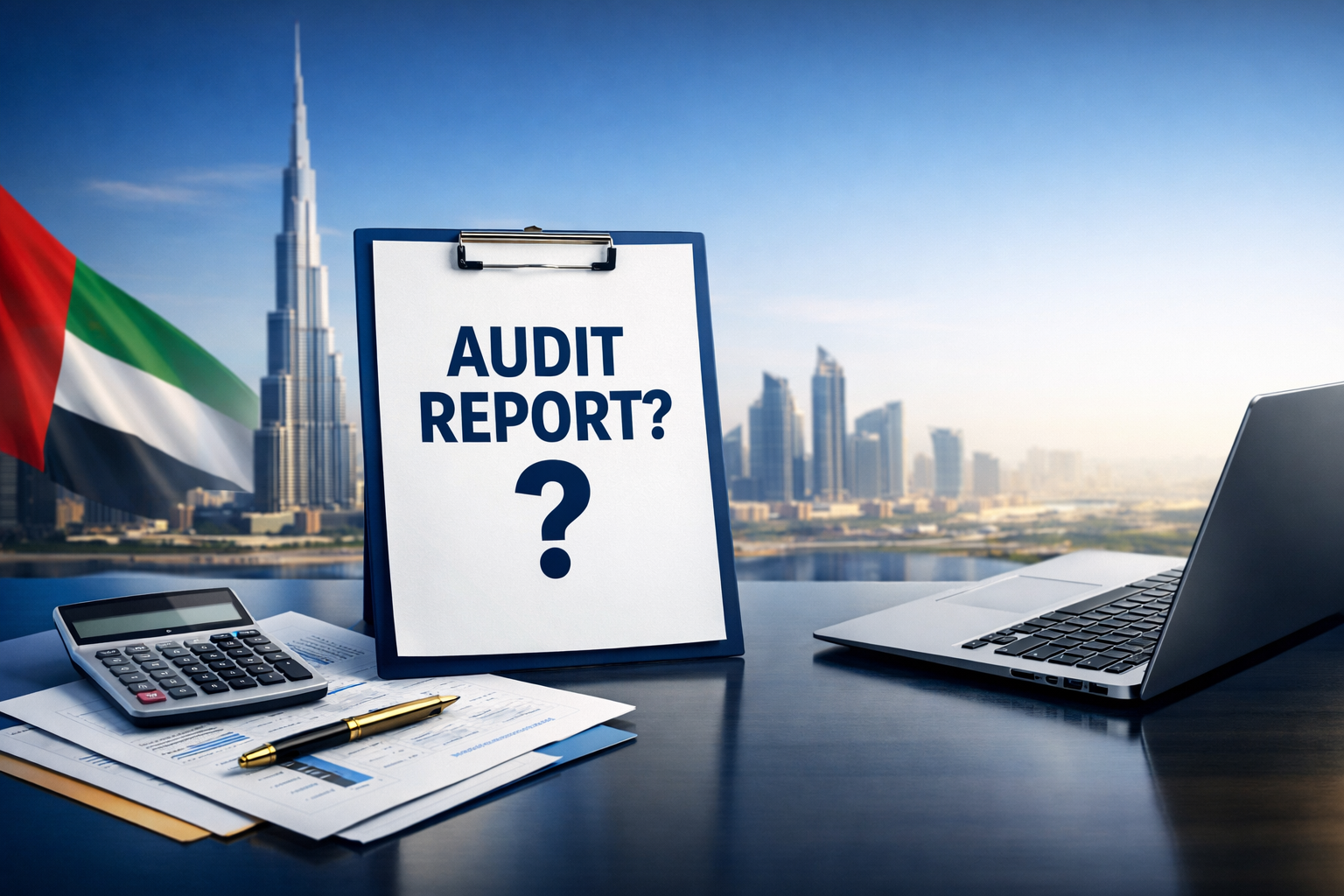
If you are preparing your UAE corporate tax filing, you might be wondering: Do you actually require an audit report? This is one of the most common questions business owners ask during corporate tax compliance, and the answer depends on several specific factors related to your company’s revenue, structure, and jurisdiction.
The good news is that not every UAE company needs an external audit for corporate tax purposes. However, recent regulatory changes in 2025 have introduced new requirements that affect certain business categories. Understanding exactly where your company falls can save you unnecessary costs and ensure you remain compliant with Federal Tax Authority (FTA) requirements.
This guide provides a clear, straightforward answer to whether you need an audit report for UAE corporate tax filing, breaking down the requirements by company type, revenue threshold, and free zone status. We have simplified the complex regulations into actionable guidance you can apply immediately to your business situation.
2. Quick Answer: Do You Need an Audit Report?
The answer depends on your company’s specific circumstances. Here is the quick breakdown:
| Your Situation | Audit Required? |
|---|---|
| Revenue below AED 50 million | ❌ No (preparation only) |
| Revenue above AED 50 million | ✅ Yes (mandatory audit) |
| Qualifying Free Zone Person (QFZP) | ✅ Yes (regardless of revenue) |
| Tax Group | ✅ Yes (special requirements apply) |
| Mainland company below AED 50M | ❌ No |
| Free zone company below AED 50M | ✅ Yes (if QFZP) |
Key Takeaway: The AED 50 million revenue threshold is the primary determinant, plus your free zone status as a Qualifying Free Zone Person.
3. Understanding the 2025/2026 Audit Requirements
Ministerial Decision No. 84 of 2025
The UAE Ministry of Finance issued Ministerial Decision No. 84 of 2025, which establishes clear requirements for audited financial statements under the Corporate Tax Law. This decision specifically addresses which entities must prepare and maintain audited financial statements for corporate tax purposes.
Under this regulation, the following entities must have their financial statements audited by a UAE-licensed auditor:
- Taxable persons with annual revenue exceeding AED 50 million
- Qualifying Free Zone Persons (regardless of revenue amount)
- Tax groups (under specific conditions outlined in the law)
- Public interest entities as defined under UAE law
What About Companies Below AED 50 Million?
If your company earns less than AED 50 million annually, you are not required to obtain an external audit report specifically for corporate tax filing purposes. However, you still must:
- Prepare financial statements in accordance with IFRS or IFRS for SMEs
- Maintain accurate books and records
- Submit financial statements (audited or unaudited) with your corporate tax return
- Keep documentation for at least 7 years upon FTA request
The key distinction is that smaller companies can submit unaudited financial statements prepared internally or with accounting support, while larger companies must obtain independent audit certification.
4. Qualifying Free Zone Persons: Special Requirements
If your company operates in a UAE free zone, you may be classified as a Qualifying Free Zone Person (QFZP) to benefit from the 0% corporate tax rate on qualifying income. However, this status comes with specific audit requirements.
QFZP Audit Requirements
As a Qualifying Free Zone Person, you must prepare and maintain audited financial statements regardless of your revenue amount. This requirement exists because:
- QFZP status grants significant tax benefits (0% on qualifying income)
- The FTA requires verification that qualifying conditions are met
- Audited statements provide assurance on compliance
Even if your revenue is well below AED 50 million, maintaining audited financial statements is a condition of retaining QFZP status and your associated tax benefits.
Non-Qualifying Free Zone Companies
Free zone companies that do not qualify for QFZP status follow the standard rules based on their revenue threshold. These companies are treated similarly to mainland companies for audit purposes.
5. Common Questions About UAE Corporate Tax Audit Requirements
What if my revenue is exactly AED 50 million?
The threshold applies to revenue exceeding AED 50 million. If your revenue is AED 50 million or below, you are not required to obtain audited financial statements for corporate tax purposes. However, proper financial statement preparation remains mandatory.
Do I need a separate audit for FTA or can I use my existing audit?
You can use your existing annual audit report for corporate tax filing purposes, provided it is prepared by a UAE-licensed auditor in accordance with applicable auditing standards. No separate FTA-specific audit is required beyond what is mandated for your regulatory compliance.
What documents must I submit with my corporate tax return?
Regardless of audit requirements, all taxable persons must submit:
- Statement of profit or loss
- Statement of financial position (balance sheet)
- Statement of changes in equity
- Cash flow statement
- Notes to the financial statements
- Auditor’s report (if applicable based on your status)
What happens if I do not comply with audit requirements?
Non-compliance with mandatory audit requirements can result in:
- Penalties from the FTA
- Disallowance of tax deductions
- Potential loss of QFZP status for free zone companies
- Additional scrutiny in future tax assessments
6. What If You Do Not Require an Audit?
If your company falls below the AED 50 million threshold and is not a Qualifying Free Zone Person, you still need to ensure your financial statements meet corporate tax standards. Here is what you should focus on:
| Requirement | What You Need |
|---|---|
| Accounting Standards | Prepare using IFRS or IFRS for SMEs |
| Documentation | Maintain proper books of accounts |
| Record Keeping | Keep records for at least 7 years |
| Financial Statements | Prepare complete statement package |
| Filing Deadline | Submit within 9 months of fiscal year end |
Even without a mandatory audit, working with qualified accountants or bookkeeping services ensures your financial statements are accurate, complete, and compliant with FTA requirements.
7. Special Offer: Free Corporate Tax Compliance Assessment
Limited Time Offer — Until 28th February 2026
FREE Corporate Tax Compliance Assessment for new clients!
This comprehensive assessment includes:
- ✅ Audit requirement determination based on your company type
- ✅ Revenue threshold analysis (AED 50 million review)
- ✅ QFZP status evaluation (for free zone companies)
- ✅ Financial statement preparation gap analysis
- ✅ Action plan for full corporate tax compliance
Don’t risk non-compliance penalties! Find out exactly what your UAE company needs to stay compliant.
8. Ready to Get Compliant?
Understanding whether you require an audit report for UAE corporate tax filing is essential for avoiding penalties and maintaining good standing with the Federal Tax Authority. The requirements may seem complex, but they boil down to simple factors: your annual revenue and your free zone status.
Whether you need an audit or not, ensuring your financial statements are accurate, complete, and prepared in accordance with accounting standards is non-negotiable for corporate tax compliance. Professional support can help you navigate these requirements efficiently and ensure your filings meet all FTA standards.
Take the uncertainty out of your corporate tax compliance today!
Contact STH Financial Services
Need help determining your audit requirements or preparing corporate tax-compliant financial statements?
📞 Phone: +971 52 629 1147
📧 Email: support@sthfinancial.com
📍 Location: Block C, VL-05-041, Main Building, SRTI Park, Sharjah, UAE
🌐 Website: sthfinancial.com
Our Corporate Tax Services Include:
- Audit requirement determination
- Financial statement preparation (IFRS compliant)
- QFZP compliance support
- Corporate tax filing assistance
- FTA compliance advisory