When Is a Statutory Audit Required in UAE? Rules for Free Zone and Mainland Companies
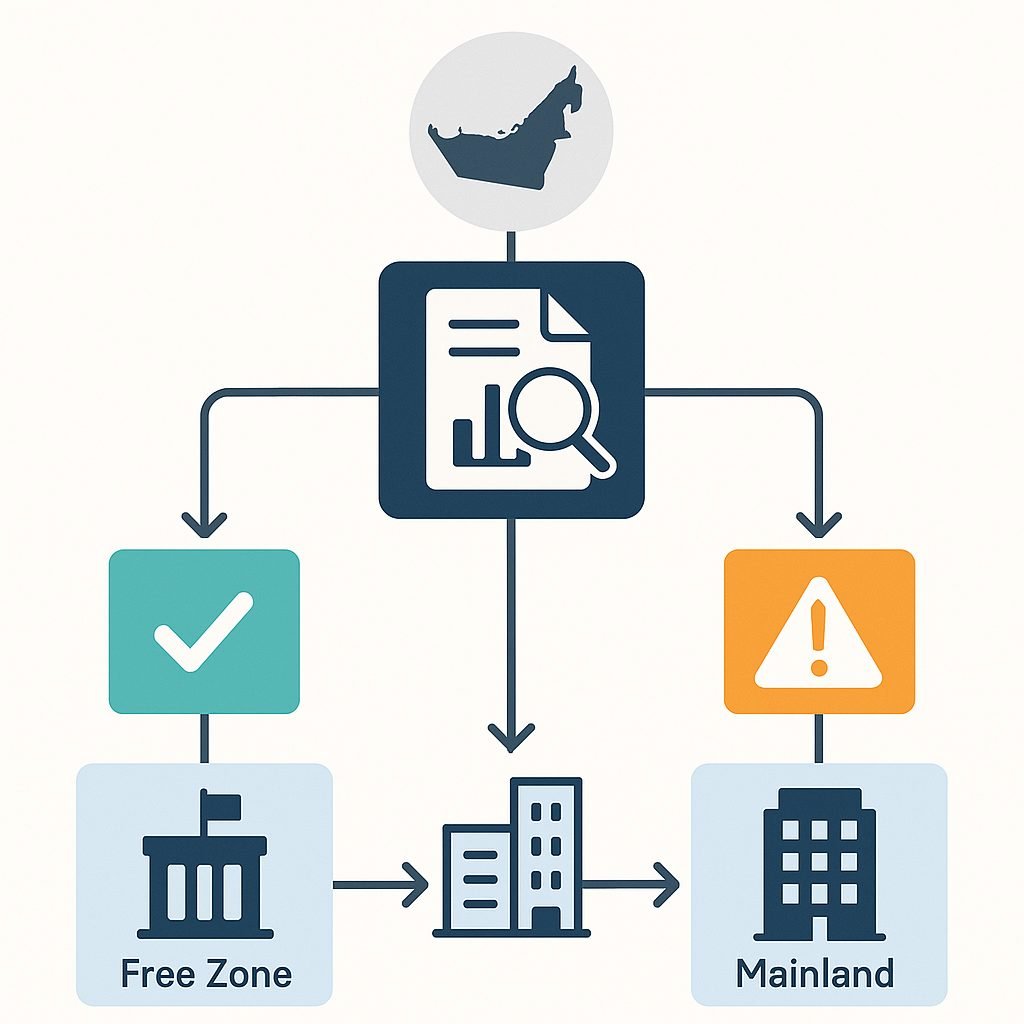
A statutory audit is required in the UAE when a company’s licensing authority, free zone regulations, corporate tax position, bank, shareholders, or legal documents require audited financial statements. For many mainland companies, the practical rule is to keep proper accounts and be ready to present audited statements when requested. For many free zone companies, annual audited accounts are a licence-renewal or regulatory requirement, especially where corporate tax Qualifying Free Zone Person status is relevant.
The key is not to treat audit as a year-end formality. Decide early, document the requirement, and close accounts properly before filing with the UAE Federal Tax Authority (FTA) through EmaraTax or renewing a licence.
01 When Is a Statutory Audit Required in UAE? The Short Answer
A UAE company generally needs a statutory audit in four situations: the law or regulator specifically requires it; the company’s memorandum, shareholders, or lender require it; the licence authority asks for it; or the business needs audited statements for tax, acquisition, liquidation, or financing purposes.
There is no single rule that says every UAE entity must file audited financial statements with one national registry every year. Instead, obligations depend on where the company is incorporated, its activity, its free zone, and its tax profile.
Important: Keep audited financial statements and supporting records even if no immediate filing is due. The FTA may request evidence during a corporate tax review, and EmaraTax submissions should reconcile with the accounting records.
02 Mainland Companies: Audit Requirements and Practical Triggers
Mainland companies registered with the Department of Economy and Tourism, or another emirate authority, must maintain proper books of account. In practice, many mainland businesses prepare audited financial statements annually because banks, partners, government tenders, investors, or group reporting require them.
Mainland companies should also watch their legal form. Limited liability companies, branches, professional firms, and sole establishments can face different document expectations at renewal, liquidation, or ownership change. If the articles of association appoint an auditor or require audited accounts, that private document becomes binding between the parties.
Common mainland triggers
- Bank facility renewal or loan applications.
- Shareholder disputes, profit distributions, or exits.
- Government tender prequalification and vendor onboarding.
- Corporate tax assessment, loss support, or transfer pricing documentation.
- Liquidation, merger, sale, or due diligence.
03 Free Zone Companies: Where Audit Rules Differ
Free zone companies need special attention because each authority can set its own audit filing rules. Some free zones require audited financial statements for licence renewal. Others request them based on company size, activity, regulated status, or corporate tax position. Always check the specific regulations, lease conditions, portal notifications, and renewal checklist for your free zone.
For corporate tax, free zone businesses must be particularly careful. A company claiming Qualifying Free Zone Person treatment needs reliable accounts to demonstrate qualifying income, adequate substance, and compliance with applicable conditions. Audited statements can become essential evidence if the FTA reviews the position through EmaraTax records or correspondence.
04 What Audited Financial Statements Usually Include
An audit is an independent examination of financial statements prepared by management. The auditor does not replace bookkeeping, tax filing, or internal controls. Management remains responsible for invoices, bank records, inventory, payroll, related-party balances, and supporting contracts.
A clean audit process usually needs a trial balance, general ledger, bank reconciliations, receivable and payable schedules, fixed asset register, VAT returns where applicable, corporate tax computations, and explanations for unusual transactions. Weak bookkeeping turns a simple audit into a costly remediation project.
05 Action Checklist Before You Appoint an Auditor
Use this checklist before the financial year closes:
- Confirm whether your mainland or free zone authority requires audited financial statements.
- Read the memorandum, shareholders’ agreement, facility letters, and investor documents.
- Appoint an auditor early, not after the renewal deadline approaches.
- Close bookkeeping monthly and reconcile bank, VAT, and corporate tax balances.
- Store invoices, contracts, customs documents, payroll records, and board approvals.
- Match audited figures with FTA submissions made through EmaraTax.
- Discuss complex transactions with a qualified UAE adviser before filing.
Note: If you discover gaps late, do not submit inconsistent numbers just to meet a deadline. Correct the books first, then explain the timing to the relevant authority or stakeholder.
06 Common Mistakes and Business Implications
The most common mistake is assuming “not filed” means “not required.” Another is waiting until licence renewal, when missing records, unsigned confirmations, or unreconciled balances can delay approval. Companies also confuse statutory audit with internal review, tax audit, or bookkeeping supervision.
The business implications are practical. Banks may refuse facilities, buyers may reduce valuation, and shareholders may challenge dividends if accounts are not independently verified. For tax, inconsistent accounts can increase questions from the FTA, especially when corporate tax, VAT, and accounting records do not agree inside EmaraTax-linked submissions.
07 Quick Examples
Example one: a Dubai mainland LLC has no routine filing request, but its bank asks for audited accounts to renew a credit line. The audit becomes commercially necessary.
Example two: a free zone consultancy wants Qualifying Free Zone Person treatment. Even if portal filing is simple, audited accounts help support income classification, substance, and tax reconciliations.
Next step: confirm your licensing authority’s audit rule before your first corporate tax return is due. Qualifying Free Zone Persons must also maintain audited financial statements to keep the 0% rate.
Audit-ready Accounts?
For UAE support, contact STH Financial’s accounting and bookkeeping team today.